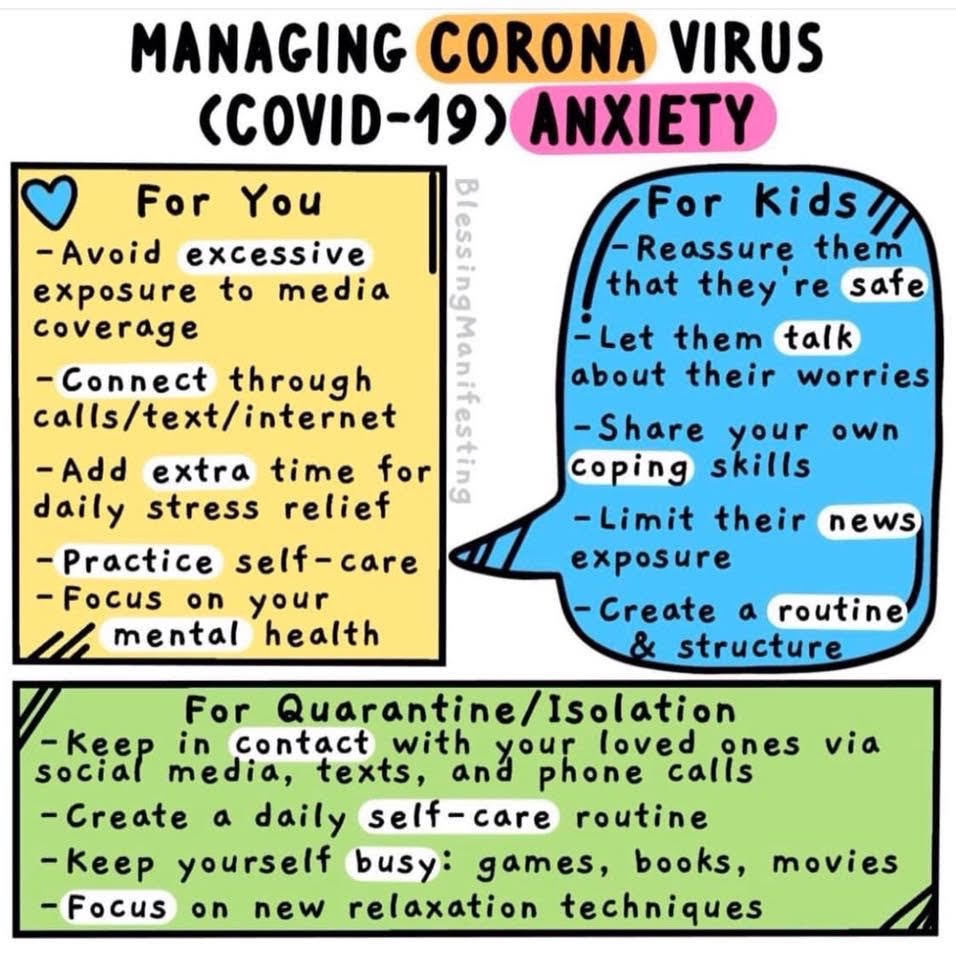
Dealing with COVID Anxiety ( PodCast Episode)


#COVID-19 #PodCast #Anxiety #Therapy #Triple5LightTherapy.com

Is COVID-19 impacting your emotional health? You’re not alone. In this episode of The Psych Central Podcast, Dr. Jasleen Chhatwal discusses how anxiety is on the rise for people with and without anxiety disorders during the pandemic, and she shares tips on how to cope. Hosted by Gabe Howard. Listen below or on your favorite podcast platform.

Listen and subscribe:

About the guest: Jasleen Chhatwal, MD, is Chief Medical Officer and Director of the Mood Disorders Program at Sierra Tucson, a premier residential behavioral health treatment center. Dr. Chhatwal also serves as an assistant professor at the University of Arizona College of Medicine. Board-certified in Psychiatry and Integrative Medicine, she is well versed in psychodynamic psychotherapy, cognitive behavioral therapy, psychopharmacology, neuromodulation including ECT and rTMS, and various emerging modalities. Dr. Chhatwal is active in the mental health community, advocating for her patients, colleagues, and profession through elected positions with the Arizona Psychiatric Society and the American Psychiatric Association.

About The Psych Central Podcast host: Gabe Howard is an award-winning writer and speaker who lives with bipolar disorder. He is the author of the popular book, “Mental Illness is an Asshole and other Observations.” To learn more about Gabe, please visit his website, gabehoward.com.

Comments

Popular posts from this blog

9 things about MLK's speech and the March on Washington

 #MLK  #MartinLutherKingJr  #MarchonWashington #IHaveaDream "I have a dream this afternoon that my four little children will not come up in the same young days that I came up within, but they will be judged on the basis of the content of their character, not the color of their skin." The Rev. Martin Luther King Jr. spoke these words in 1963, but this was not the speech that would go down as one of the most important addresses in US history. King spoke these words in Detroit, two months before he addressed a crowd of nearly 250,000 with his resounding "I Have a Dream" speech at the March on Washington for Freedom and Jobs on August 28, 1963. Several of King's staff members actually tried to discourage him from using the same "I have a dream" refrain again. As we all know, that didn't happen. But how this pivotal speech was crafted is just one of several interesting facts about what is one of the most important moments in the 2...

Coping With Moods: The Challenge of the Turbulent Mind

#Mood #Impulses #selfregulate #selfsoothe  #Triple5LightTherapy #BlackMaleTherapist #Psychotherapy The power of moods and impulses can be overwhelming, but we can learn to self-regulate and self-soothe through awareness practices like meditation and mindfulness. By developing a healthy dialogue with our emotional nature, we can access deeper parts of ourselves and become more resilient in the face of stress and pressure. Rather than being swept away by our ever-shifting moods, we can learn to pause and reflect before acting. by Gillian McCann, Ph.D., and Gitte Bechsgaard, RP

Remembering Martin Luther King Jr.

#MLK #Assassination #MartinLutherKingJr #Memorial  National Civil Rights Museum The Lorraine Motel where James Earl Ray assassinated King on April 4, 1968, is a complex of museums that trace the civil rights movement in the U.S. from the 17th century to the present. #MLK #MartinLutherKingJr #Memorial https://www.civilrightsmuseum.org/

Psychologists Have Created A League Table Of Scary And Revolting Animals Phobias

#Psychology #MentalHealth #Phobias #Animalphobias #Spider #Snake #Dog You may be best advised not to read this article late at night or before you eat. Psychologists at the National Institute of Mental Health and Charles University in the Czech Republic have surveyed a large sample of non-clinical volunteers to gauge their reaction to 24 creatures that are commonly the source of specific animals phobias. The results, published in the British Journal of Psychology, contribute to our understanding of animal phobias and could prove incredibly useful to horror writers. Among the key findings is that spiders were unique in being both intensely fear- and disgust-inducing in equal measure. The researchers said this may be due to their mix of disgusting properties – including their “quirky ‘too-many-legs’ body plan” – combined with the fact they are “…omnipresent in our homes, often lurking in the hidden dark places and capable of fast unpredictable movement.” In other words, the intense ...