[Audio] Greyboy with Bart Davenport · Genevieve


#BartDavenport #Genevieve  #Greyboy #SoulMosaic

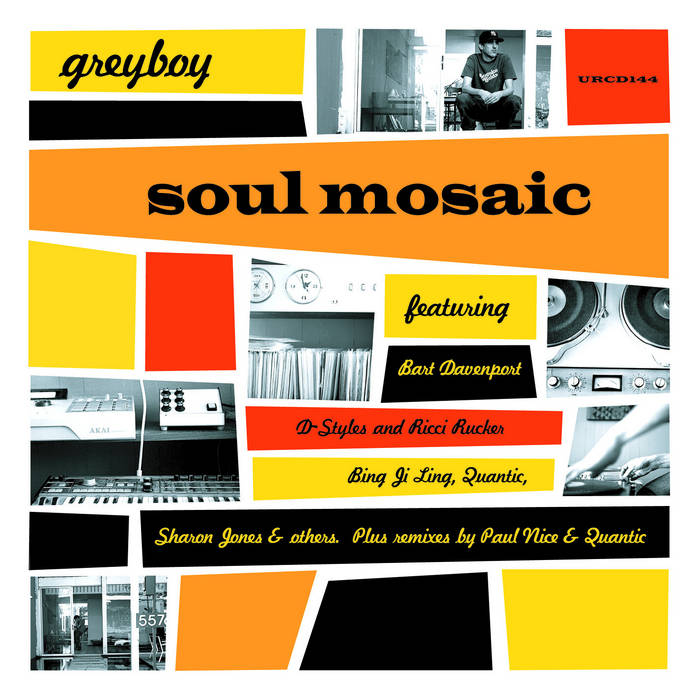
The tracks crafted on the fourth  Grey boy album include groundbreaking territory for the Southern California based producer/DJ Bart Davenport . For the first time, he has recorded full vocal songs adding a new soulful dimension to his music. The trademark laid-back West Coast Greyboy beats remain central to #SoulMosaic

Vocalists like Bay Area underground favorite Bart Davenport formerly of The Kinetics and now a solo artist on Paris Caramel records sings on the two sold-out singles "To Know You is To Love You" and "Genevieve", cover versions of a Stevie Wonder tune (originally recorded by Syreeta) and Cymande respectively. "Genevieve" was nominated as one of the songs of the year by Radio 1's Worldwide host Gilles Peterson. East Coast-based Sharon Jones has made a storming come back with Daptone Records over recent years and also appears on two tracks. San Francisco up n'comer Bing Ji Ling adds a lil' Shuggie Otis folksy soul and guitar while MCs like Mainflo (TVT), and musicians and turntablists like D-Styles and Ricci Rucker (Sound In Color) maintain the hip hop pressure. Rounding out the mosaic are co-producers like the UK-based Quantic and West Coaster Mike Andrews, who recently had a hand in the Christmas #1 spot on the UK charts with a version of Tears For Fears "Mad World" from the Donnie Darko soundtrack.


Comments

Popular posts from this blog

Are we really listening to what MLK had to say?

#MartinLutherKingJr #MLK #CivilRights #DrKing In 2020, the Martin Luther King Jr. holiday falls in a national election year, one that reminds us of the importance of voting rights, citizenship and political activism to the health of our democracy. King imagined America as a "beloved community" capable of defeating what he characterized as the triple threats of racism, militarism and materialism. The passage of the 1964 Civil Rights Act and the 1965 Voting Rights Act, alongside the 1954 Brown Supreme Court decision, represents the crown jewels of the civil rights movement's heroic period. Yet King quickly realized that policy transformations alone, including the right to vote, would be insufficient in realizing his goal of institutionalizing radical black citizenship toward the creation of the "beloved community." King argued that justice was what love looked like in public. 2020 also marks the 55th anniversary of the passage of the Voting...

Coping With Moods: The Challenge of the Turbulent Mind

#Mood #Impulses #selfregulate #selfsoothe  #Triple5LightTherapy #BlackMaleTherapist #Psychotherapy The power of moods and impulses can be overwhelming, but we can learn to self-regulate and self-soothe through awareness practices like meditation and mindfulness. By developing a healthy dialogue with our emotional nature, we can access deeper parts of ourselves and become more resilient in the face of stress and pressure. Rather than being swept away by our ever-shifting moods, we can learn to pause and reflect before acting. by Gillian McCann, Ph.D., and Gitte Bechsgaard, RP

Daylight saving time begins soon: when do we change the clocks?

#Daylightsavingtime #March8 Since the winter solstice on Dec. 21, 2019, the nights have been getting shorter, and the days are longer. So, when do we change the clocks? Daylight saving time (often erroneously said as daylight savings time) begins Sunday, March 8, 2020. via GIPHY That Sunday, the clocks will spring forward, causing areas that practice daylight saving time to lose an hour (don't worry, the hour is gained back in the fall). When the clock strikes 2 a.m., the time will change to be 3 a.m. via GIPHY Most of the United States practices daylight saving time,  much to the disdain of lawmakers including  Lancaster County Sen. Scott Martin (R-Martic Township). Arizona is the only state that refrains from practicing daylight saving due to the summertime heat. The residents of Arizona prefer their cooler nights as a break from the harsh temperatures,  according to the National Geographic. The amount of sunlight ...

9 things about MLK's speech and the March on Washington

 #MLK  #MartinLutherKingJr  #MarchonWashington #IHaveaDream "I have a dream this afternoon that my four little children will not come up in the same young days that I came up within, but they will be judged on the basis of the content of their character, not the color of their skin." The Rev. Martin Luther King Jr. spoke these words in 1963, but this was not the speech that would go down as one of the most important addresses in US history. King spoke these words in Detroit, two months before he addressed a crowd of nearly 250,000 with his resounding "I Have a Dream" speech at the March on Washington for Freedom and Jobs on August 28, 1963. Several of King's staff members actually tried to discourage him from using the same "I have a dream" refrain again. As we all know, that didn't happen. But how this pivotal speech was crafted is just one of several interesting facts about what is one of the most important moments in the 2...