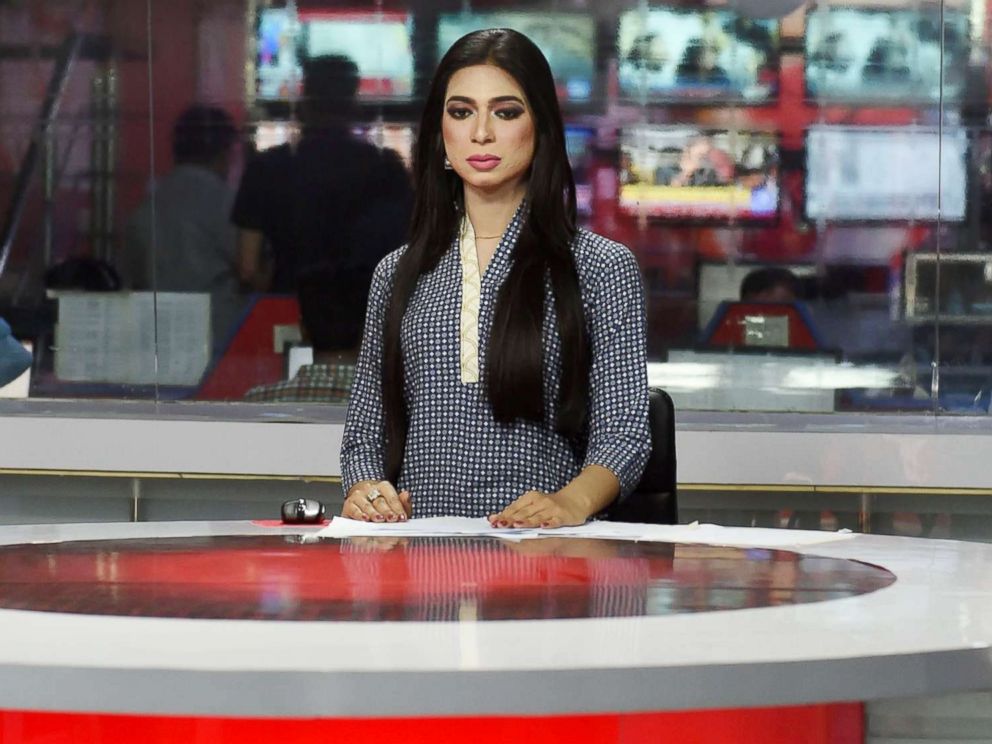
Transgender TV Anchor Challenges Pakistani Culture From A News Desk | NBC Out (Video)


#MarviaMalik #PakistaniCulture #Transgender

Abandoned by her family and stigmatized by society, trans journalist Marvia Malik breaks barriers and challenges discrimination as Pakistan’s first transgender news anchor.

Marvia Malik was a model and is now also a television news anchor. She told BBC News that she was so excited when she got the anchor job that she had to stop herself from screaming. Malik studied journalism in school and said she cried when she got the news about her new role.

Many Pakistani transgender people aren’t treated as equals and, like Malik, are sometimes pushed out of or disowned by their families. The Senate in Pakistan voted in favor of a bill earlier this month that, if passed into law, would protect transgender people and allow them to decide their own gender rather than requiring a medical examination. The bill would eliminate the examination process and also mean companies could no longer discriminate against trans people, Times of India reported. Malik is bringing visibility to transgender people in a society in which they are frequently treated poorly. Her first broadcast received a lot of support on social media from people in Pakistan as well as from celebrities in the United States.BY  

Comments

Popular posts from this blog

9 things about MLK's speech and the March on Washington

 #MLK  #MartinLutherKingJr  #MarchonWashington #IHaveaDream "I have a dream this afternoon that my four little children will not come up in the same young days that I came up within, but they will be judged on the basis of the content of their character, not the color of their skin." The Rev. Martin Luther King Jr. spoke these words in 1963, but this was not the speech that would go down as one of the most important addresses in US history. King spoke these words in Detroit, two months before he addressed a crowd of nearly 250,000 with his resounding "I Have a Dream" speech at the March on Washington for Freedom and Jobs on August 28, 1963. Several of King's staff members actually tried to discourage him from using the same "I have a dream" refrain again. As we all know, that didn't happen. But how this pivotal speech was crafted is just one of several interesting facts about what is one of the most important moments in the 2...

A call for equality and freedom, it became one of the defining moments of the civil rights movement

       #MLK #MartinLutherKingJr #IHaveaDream I Have a Dream, speech by Martin Luther King, Jr., that was delivered on August 28, 1963, during the March on Washington. A call for equality and freedom, it became one of the defining moments of the civil rights movement and one of the most iconic speeches in American history. Some 250,000 people gathered at the Lincoln Memorial in Washington, D.C., for the March on Washington. The one-day event both protested racial discrimination and encouraged the passage of civil rights legislation; at the time, the Civil Rights Act was being discussed in Congress. The march featured various speeches as well as musical performances before King, a celebrated orator, appeared as the final official speaker; A. Philip Randolph and Benjamin Mays ended the proceedings with a pledge and a benediction, respectively. Early in his prepared speech, King referenced Abraham Lincoln’s Gettysburg Address with “Five score years ago….” He then spoke a...

Remembering Martin Luther King Jr.

#MLK #Assassination #MartinLutherKingJr #Memorial  National Civil Rights Museum The Lorraine Motel where James Earl Ray assassinated King on April 4, 1968, is a complex of museums that trace the civil rights movement in the U.S. from the 17th century to the present. #MLK #MartinLutherKingJr #Memorial https://www.civilrightsmuseum.org/

Are we really listening to what MLK had to say?

#MartinLutherKingJr #MLK #CivilRights #DrKing In 2020, the Martin Luther King Jr. holiday falls in a national election year, one that reminds us of the importance of voting rights, citizenship and political activism to the health of our democracy. King imagined America as a "beloved community" capable of defeating what he characterized as the triple threats of racism, militarism and materialism. The passage of the 1964 Civil Rights Act and the 1965 Voting Rights Act, alongside the 1954 Brown Supreme Court decision, represents the crown jewels of the civil rights movement's heroic period. Yet King quickly realized that policy transformations alone, including the right to vote, would be insufficient in realizing his goal of institutionalizing radical black citizenship toward the creation of the "beloved community." King argued that justice was what love looked like in public. 2020 also marks the 55th anniversary of the passage of the Voting...