
#Community #LaderaHeights #MagicJohnson #Starbucks
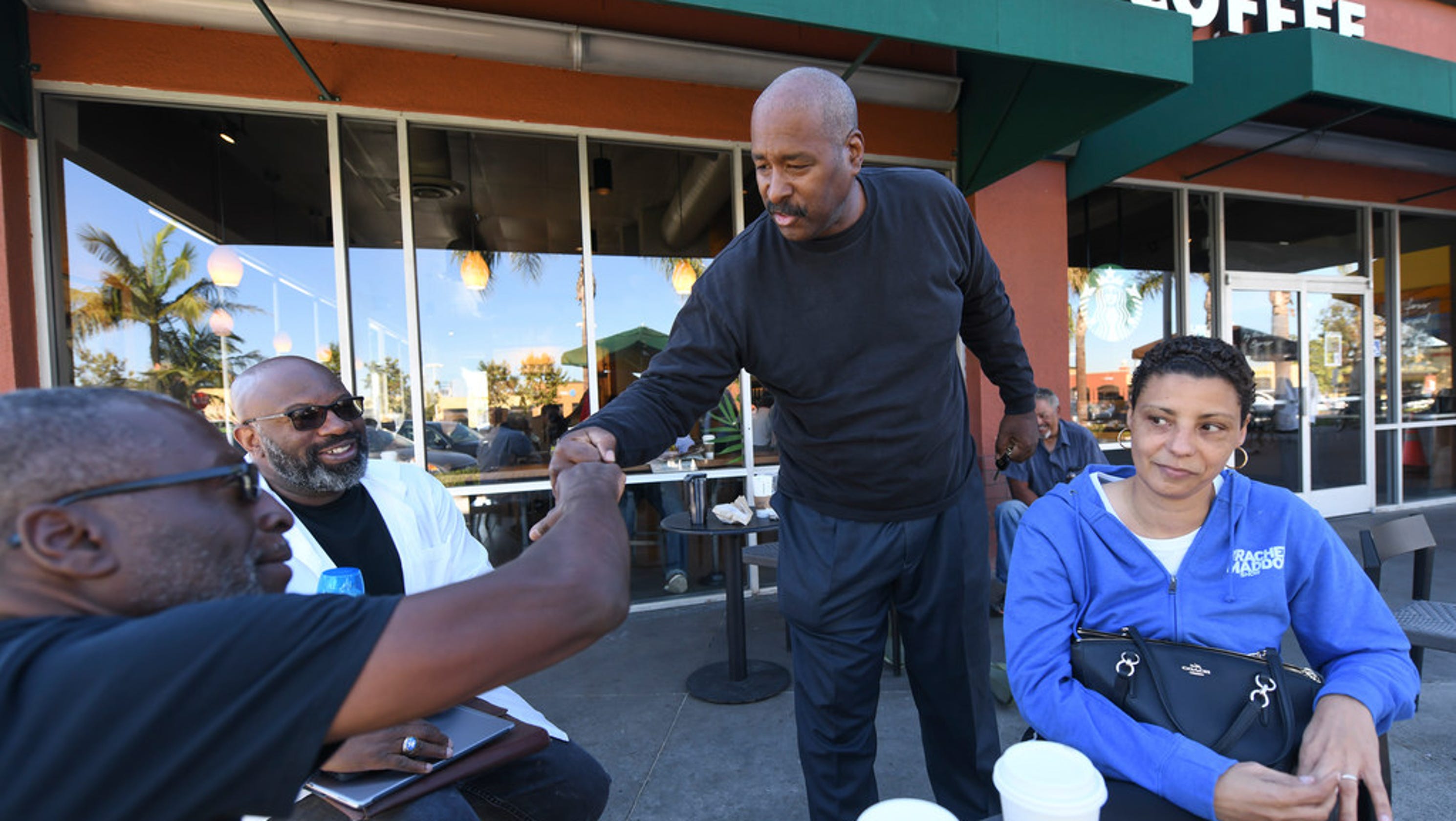
LOS ANGELES – You might not think the closing of one Starbucks with two others literally only hundreds of feet away would make much of a difference. But in the predominantly black, high-income Ladera Heights neighborhood of Los Angeles, this Starbucks leaving is about more than having to get coffee somewhere else.
“It hurts us because we’ve been patronizing them for 20 years,“ said Silas Braxton, 68, who works at the nearby restaurant The Serving Spoon and is part of a group of regulars who play dominoes at the Ladera Starbucks every day. “It’s like they’re plucking the heart out of our community.”
This location is serving its last latte on Sunday. Since the Ladera Heights Starbucks opened in partnership with Magic Johnson in 1998, it has been a hub of activity.

Grounded in community
Most days, you'd find much the same scene among the tables dotted with cups of java and laptops: In the mornings, an overflowing table of elder gentlemen by the window energetically debating the hot topics of the day with, perhaps, an intimate round of two-person Uno across the way, and in the afternoons, friendly trash-talkers slapping the timers in heated games of speed chess lined up at the long table, and the sound of “bones” or dominoes hitting the tables on the patio amid the laughs and jibes passed around the circle of players.King Anthony, 57, another regular who can usually be found holding court immersed in a game of speed chess, began frequenting this location while living in neighboring Inglewood 15 years ago but now drives an hour from the South Bay region of Los Angeles County every day. He isn’t ready to believe the place is really closing. “They haven’t posted any signs. They haven't said thank you to the community. Why not explain what’s happening and tell us you appreciate us? Because it IS our business,” Anthony said.
Computer engineer Raymond Lester, 64 calls the loss “devastating,” adding, “there aren’t many spaces for black men and women to come together and to network.”
Chiropractor Monique Anthony, 51, knows this all too well. She's been coming to this location since the day it opened and said she's benefited immensely from the connections she’s made over the years.
“Coming here has been great for my business. I meet patients here because people are always referring them to me. There’s a camaraderie here – it’s not just a community, it’s a family. When one of us is sick, we send flowers and cards.”
This Starbucks, originally opened by Urban Coffee Opportunities, a 50-50 partnership between Starbucks Coffee Company and Magic Johnson’s Johnson Development Corporation, landed in the Ladera Center shopping plaza when the neighborhood was a virtual coffee dessert. Twelve years later, in 2010, Johnson sold his 50 percent stake of Urban Coffee Opportunities to Starbucks, making the coffee giant the sole owner of the more than 100 stores UCO had opened in mostly underserved communities.
Today, it's a coffee desert no more. There is a Starbucks location inside of the Ralph’s grocery store in the same plaza and a drive-thru location across the street, although regulars here are quick to point out that neither of those locations are conducive to socializing. Starbucks spokesperson Reggie Borges told USA TODAY with three locations in such close proximity, the company feels they could better serve more of the community by moving this store.
“We know that store is a special place where connections are made. We are actively looking for a new location to put a store up in that same Ladera neighborhood to replace it,” Borges said. In the meantime, the closing of this location may present an opportunity for several new independent coffee shops in the area to percolate as the new center of the community.
The local coffee landscape
“I often ask myself, ‘where did people go before coffee shops?,’ ” said Anthony Jolly, 44, Owner of Hot and Cool Cafe, which opened earlier this year in nearby Leimert Park. “As this community changes,” Jolly said, referring to the shifting demographics in South L.A., which is seeing an influx of young professionals of all races. “I wanted to come in and create a space where people of color can come in and collaborate.”
Sip & Sonder, already a burgeoning event space in nearby Inglewood, will open its full cafe before the end of the year. Co-owner Amanda-Jane Thomas emphasizes the importance of spaces that feel welcoming.
“Coffee shops are often signs of gentrification or that an area is changing. Growing up, when I saw a coffee shop opening up in a community, they weren't always spaced that I, or other people I know, would feel comfortable in," she said. "With Sip & Sonder, our philosophy is all about creating a space for the community.”
For the Ladera Starbucks crowd hoping to congregate to a new coffee shop, it will be a matter of what feels right. Fred Jackson, a 58-year-old retiree who has been a fixture at the Starbucks since moving to the neighborhood from Orange County 12 years ago said, “ We plan to stay together. We’re going to vet other coffee shops. We’re going to see who accepts us.”
By Sabrina Ford, USA TODAY -Oct. 19, 2018
Comments
Post a Comment